
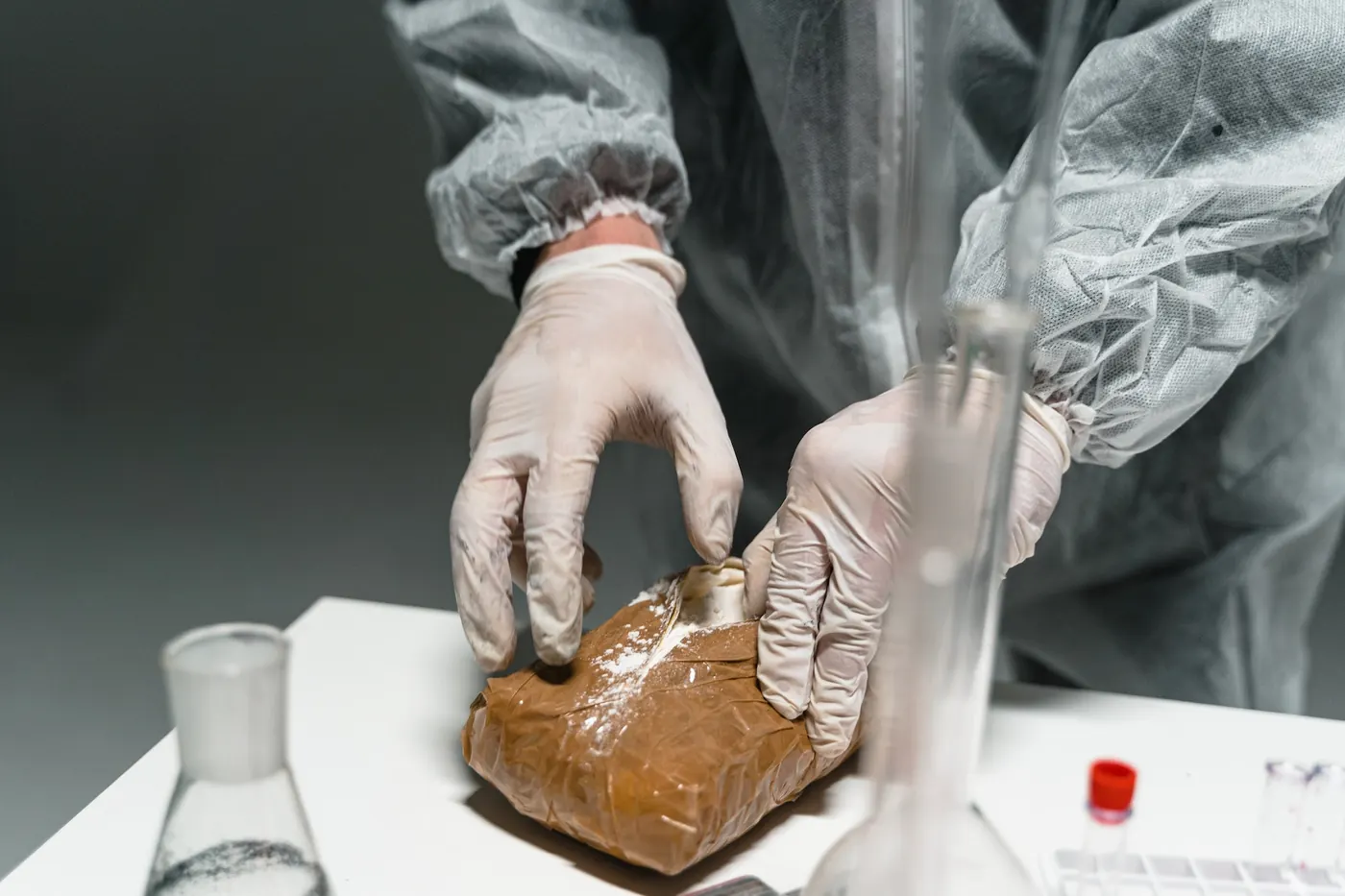
MAIN FORMS
Cocaine (benzoylmethylecgonine) is a naturally occurring psychoactive alkaloid and stimulant found in specific varieties of the coca plant, in particular Erythroxylum coca (E. coca) and Erythroxylum novogranatense (E. novogranatense).
- coca and E. novogranatense are native to the Andes region of western South America.
– E. coca is cultivated in the Plurinational State of Bolivia (Bolivia) and Peru
– E. novogranatense is cultivated in Colombia and Central America.
- The two most common forms of cocaine are hydrochloride salt (powdered) and cocaine base.
– Powdered hydrochloride is the most common form of cocaine available in Australia, which can be snorted, rubbed into the gums or dissolved in water and injected.
– Cocaine base, often referred to as ‘crack’, has a rock crystal appearance and is readily converted into vapour with heat, making it suitable for inhalation. Crack cocaine is not commonly encountered in Australia (Baker et al. 2004; US DEA 1993).
NATIONAL IMPACT
Cocaine remains among the most consumed and seized drugs worldwide. While the total area under coca bush cultivation remained relatively stable in 2018, cocaine production increased. Colombia continues to account for the greatest proportion of global coca bush cultivation. In 2018, the weight of cocaine seized globally reached record levels, with the majority of cocaine seized in the Americas and Europe. WCO agencies reported a decrease in the number of global cocaine seizures in 2019, but an increase in the cocaine weight seized.
Indicators of supply and demand point to a continued expansion of the Australian cocaine market, with demand indicators pointing to increases in consumption.
Indicators of demand for cocaine include surveys of people who use drugs, police detainees and wastewater analysis.
- According to the NDSHS, the reported recent use of cocaine and use in lifetime increased in 2019.
- According to the ANSPS, the proportion of respondents reporting cocaine as the drug last injected remained stable in 2019.
- According to a national study of people who regularly inject drugs and of people who regularly use ecstasy and other stimulants, the reported recent use of cocaine increased while the median days of cocaine use remained stable in 2020.
- According to a national study of police detainees, the proportion of detainees testing positive to cocaine remained relatively stable in 2019–20, while self-reported cocaine use increased to a record level.
- The NWDMP indicates that average cocaine consumption in capital city sites exceeds regional consumption. When comparing data for August 2019 to August 2020, the population-weighted average consumption of cocaine increased in both capital city and regional sites.
Indicators of cocaine supply include border detection, forensic profiling, seizure, arrest, price and purity data. Compared to 2018–19, in 2019–20:
- Both the number and weight of cocaine detections at the Australian border decreased.
- Forensic profiling indicates that Colombia remains the predominant source of analysed cocaine in Australia.
- There was a record number of national cocaine seizures, while the weight of cocaine seized nationally decreased.
- There was a record number of national cocaine arrests.
- The national median price for 1 gram of cocaine increased.
- The annual median purity of analysed cocaine samples fluctuated.
Obtained from: IDDR 2019-20_271021_Cocaine.pdf (acic.gov.au)
Need legal advice?
If you've been charged or contacted by police, get advice early. Mark Savic is available 24/7 for urgent matters in Airlie Beach, the Whitsundays and across Queensland.